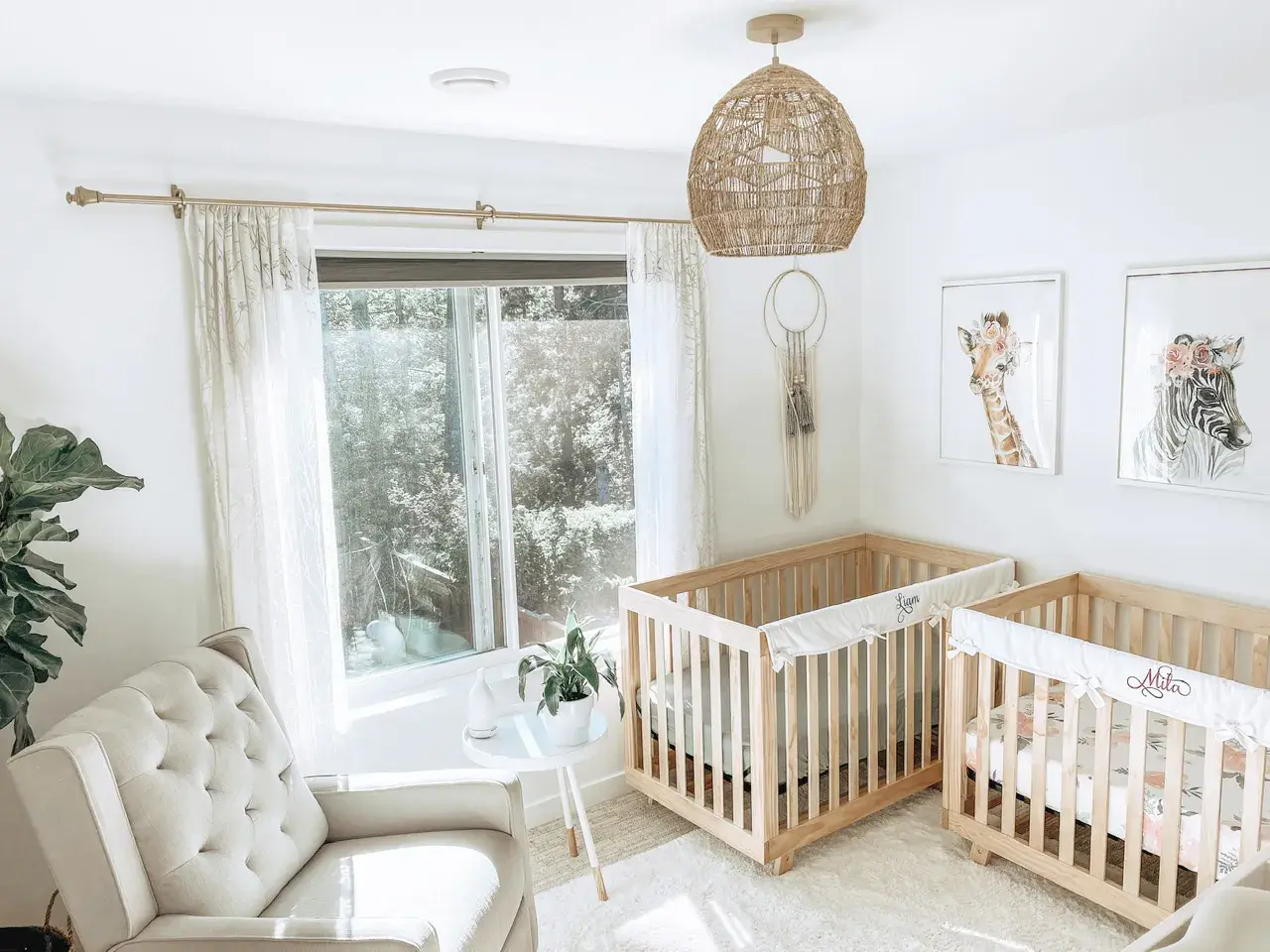
A nursery for twins works best when it behaves like a small command center: two safe sleep spaces, one efficient changing zone, and storage that keeps up with double the laundry. The prettiest rooms usually fail at 2 a.m.; the smartest ones make feeding, settling, and refilling supplies almost automatic. In this guide, I focus on the layout choices, furniture, storage, and style decisions that actually make life easier.
The fastest way to make a twin nursery work
- Start with function first. Two sleep spaces, a clear changing zone, and easy access to supplies matter more than a perfect theme.
- Choose the layout around movement. The best plan reduces steps between cribs, dresser, and chair.
- Keep sleep areas bare. A firm, flat mattress with a fitted sheet is the standard I would not bend on.
- Plan for duplicates. Twins do not just need two cribs; they need more sheets, more storage, and more laundry capacity.
- Style the room lightly. Calm color, good lighting, and a few strong pieces usually age better than heavy decor.
For families with twins, the first real decision is not the wallpaper or the theme. It is whether the room will support nighttime care without making every wake-up feel like a project. The AAP recommends room sharing for at least the first 6 months, and that is one reason I like to think of the nursery as a support space for feeding, changing, and rest, not just a decorated bedroom.
What the room needs to do first
I always start with three zones: sleep, care, and supply. The sleep zone holds the cribs or bassinets. The care zone is where the diaper changes happen, ideally with a pad, wipes, creams, and spare clothes within one arm’s reach. The supply zone is the storage that keeps backups from drifting across the room every day.
That structure sounds basic, but it prevents the most common design mistake I see in twin rooms: people build the room around a cute focal wall and then try to fit the practical pieces into whatever remains. For twins, the practical pieces should lead. If the room needs to support pumping, bottle prep, or overnight soothing, those tasks deserve floor-plan priority, not leftover space.
- Sleep zone: two separate infant sleep spaces with clear access from both sides if possible.
- Care zone: a dresser-top changing setup or compact changing table near the entrance of the room.
- Supply zone: drawers, baskets, or bins for diapers, swaddles, creams, sheets, and backups.
- Parent zone: a comfortable chair with a side table, charger, and light that does not wake the whole room.
If the nursery also has to become a playroom later, I would leave more open floor space than you think you need now. That makes the room easier to crawl in later and easier to clean from day one. Once those jobs are clear, the layout becomes much easier to judge.
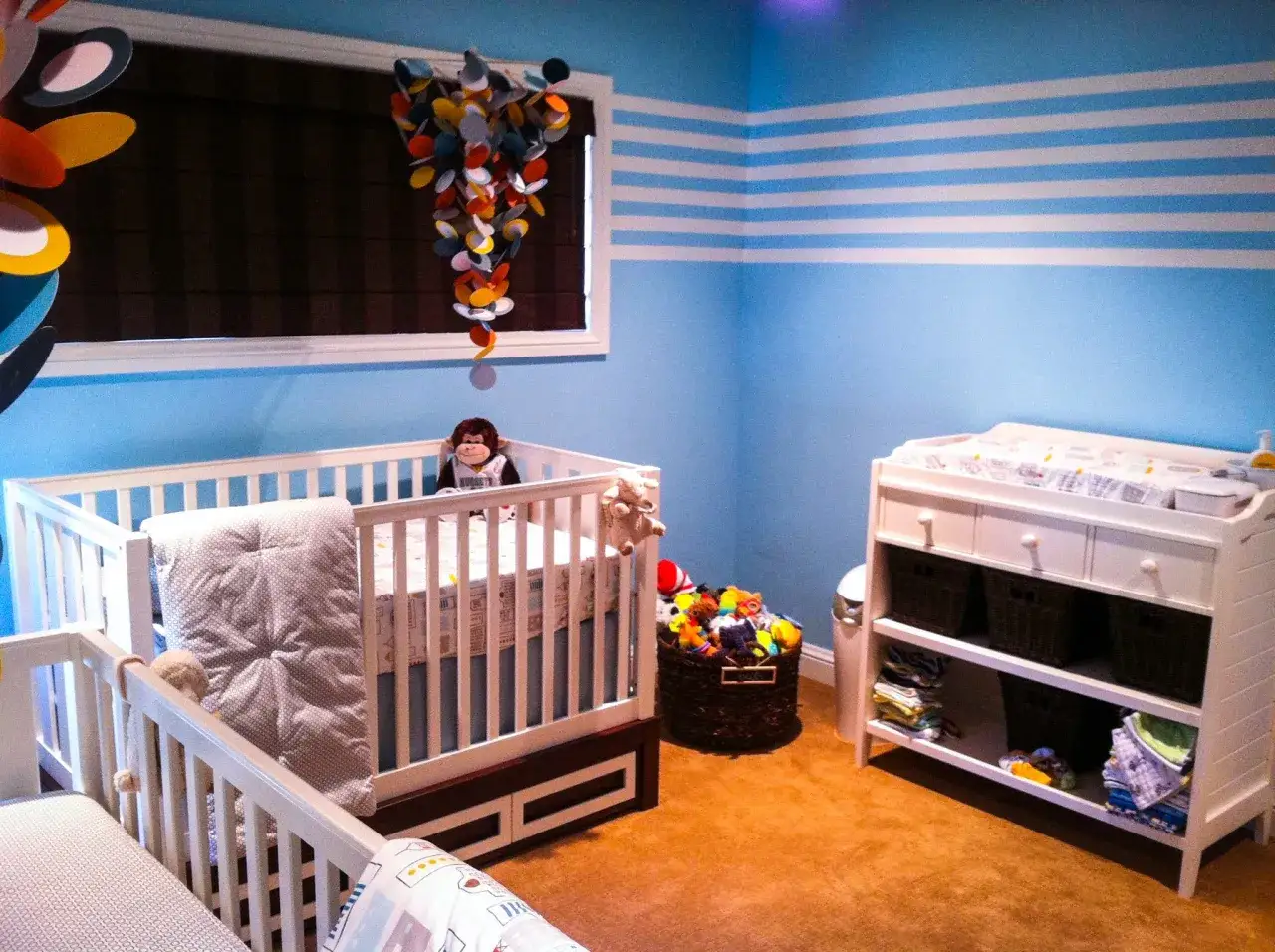
Layouts that make twin care less chaotic
The best layout is the one that shortens the distance between the things you touch most often. In a twin room, that usually means cribs, diapers, a laundry basket, and a chair. I like to compare a few options before I commit, because the right layout for a square room can be awkward in a long, narrow one.
| Layout | Best for | Why it works | Trade-off |
|---|---|---|---|
| Side-by-side cribs | Square or wider rooms | Creates a simple visual line and keeps both babies close to the same supplies | Takes up one long wall quickly |
| Cribs on opposite walls | Narrow rooms | Preserves the center of the room and leaves space for a changing station | Requires a little more walking during night wakes |
| Cribs with a shared dresser in the middle | Medium rooms with decent storage needs | Lets one piece of furniture do double duty as storage and changing surface | You need careful drawer clearance so traffic stays open |
My rule is simple: if the room feels tight when it is empty, it will feel worse once you add a rocker, two cribs, and a basket of laundry. In that case, I would rather use a compact changing setup and keep the center of the room clear than force in a big furniture set that looks good in photos but gets in the way at night. Keep cords, curtain pulls, and lamp wires out of reach, and avoid placing anything tall where it can block the path to either crib.
A layout should also make caregiving feel symmetrical. Even if one twin tends to wake more often in the early weeks, the room should not make one crib harder to reach than the other. That small detail saves energy fast, and it leads naturally to the furniture choice underneath the layout.
Sleep furniture that earns its keep
For twins, furniture should be chosen for fit and safety first, then for style. Two separate sleep spaces are non-negotiable. The AAP recommends room sharing for at least the first 6 months, and CPSC guidance is equally blunt about keeping the sleep space bare: firm, flat, and limited to a fitted sheet. That means no bumpers, no loose blankets, and no stuffed toys in the crib.
I would narrow the furniture list to the pieces that carry the most weight in daily life:
- Full-size crib: Best if you have the room and want a longer usable window.
- Mini crib: Useful in smaller rooms, but it is a short-term solution, so I would only choose it if you are comfortable transitioning sooner.
- Convertible crib: Worth it when build quality is strong and you want toddler use later, not because it is automatically the “better” option.
- Dresser with changing top: Often more useful than a dedicated changing table because it keeps storage and diapering in the same footprint.
| Item | Practical planning range | Notes |
|---|---|---|
| Two cribs | $300-$1,200 total | Mini cribs and simpler finishes sit lower; convertible or higher-end frames cost more |
| Two firm crib mattresses | $120-$400 total | Fit matters more than extra padding |
| Changing setup | $150-$700 | A dresser-top setup often gives the best value |
| Lighting, monitor, blackout curtains | $150-$500 | These items affect nighttime use more than decor does |
As a planning estimate, a basic twin nursery can land around the low thousands once you account for duplicates, while a more polished setup climbs fast if you choose premium furniture. I would rather spend more on strong cribs and good mattresses than on a matching set that saves nothing in daily use. That leads directly into the part many people underestimate: storage.
Storage and laundry systems that stop the room from filling up
Twins multiply clutter in a way that surprises people. It is not just that there are two babies. It is that every useful item turns into a duplicate, and duplicates need a home. When storage is weak, the nursery starts looking busy before the babies even arrive.
I like to build storage around categories that get used every day, not around decorative symmetry. A room with labeled bins and clear drawer zones usually works better than a room with pretty baskets that are too small to be useful. If the babies are close in size, category-based storage is easier. If they are different sizes, I would split the essentials by baby until the wardrobe naturally changes.
- Sheets: Keep at least 3 fitted sheets per crib so one can be on the bed, one in the wash, and one ready to go.
- Protectors: Use 2 mattress protectors per crib to make overnight accidents less stressful.
- Swaddles or sleep sacks: Keep 2-4 per baby in rotation, depending on how often you do laundry.
- Burp cloths: Start with 12-18 total; they disappear quickly in real life.
- Diapers and wipes: Keep one open stock area plus a smaller backup stash so you never have to hunt mid-change.
For storage furniture, I prefer a dresser with deep drawers, a rolling caddy for the changing area, and one clearly marked laundry basket per category or per baby. That sounds almost boring, and that is exactly the point. Boring storage is fast, repeatable, and easy for every caregiver to use without asking where anything lives. Once that system is in place, the room can afford to look calmer and more intentional.
Style choices that stay calm with two babies
Designing for twins does not mean the room has to look generic. It just means the style should support the room instead of competing with it. I tend to like soft neutrals, one or two accent colors, and a texture mix that adds warmth without adding visual noise. A single strong wall color or wallpaper panel can work beautifully if the rest of the room stays quiet.
If you want the room to feel personal, I would do it through art, textiles, and small objects rather than through an overbuilt theme. A woodland, celestial, or safari idea can work well, but only if you keep it restrained. The moment a theme starts demanding too many figurines, wall pieces, and matching accessories, it begins to fight with the practical side of the nursery.
- Use one main palette: soft gray-green, warm beige, dusty blue, or muted terracotta all work well because they age reasonably well.
- Repeat a few materials: wood, cotton, woven storage, and one washable rug usually create more warmth than extra decor does.
- Keep light controllable: a dimmable lamp and blackout curtains make nighttime care much easier.
- Put decoration where hands will not reach: wall art and shelves above crib height look better and last longer.
If the room will later become a playroom, I would choose bins, shelves, and a rug with that future in mind. Open storage for toys, if used now, should be easy to label and easy to close later. That way the nursery grows into the next stage instead of needing a full reset.
The last checks I would lock in before week one
Before I call a twin nursery finished, I check the small things that save time when sleep deprivation is high. The room should work when you are tired, one-handed, and trying not to wake the other baby. If any item needs explanation at 3 a.m., it probably belongs somewhere else.
- Anchor tall furniture to the wall.
- Test the monitor from the crib corners, not just from the doorway.
- Keep a night-light that is bright enough for diaper changes but not so bright that it resets everyone.
- Pre-wash sheets, swaddles, and any fabric that will touch baby skin.
- Leave one open floor area for tummy time and quick outfit changes.
- Make sure the diaper station can be reached without opening three drawers and crossing the room.
In the end, the best twin nursery is not the most decorated one. It is the room that makes feeds, changes, and short stretches of sleep feel less complicated. If the design helps you move smoothly between two babies without extra steps, you have built the part that matters most.