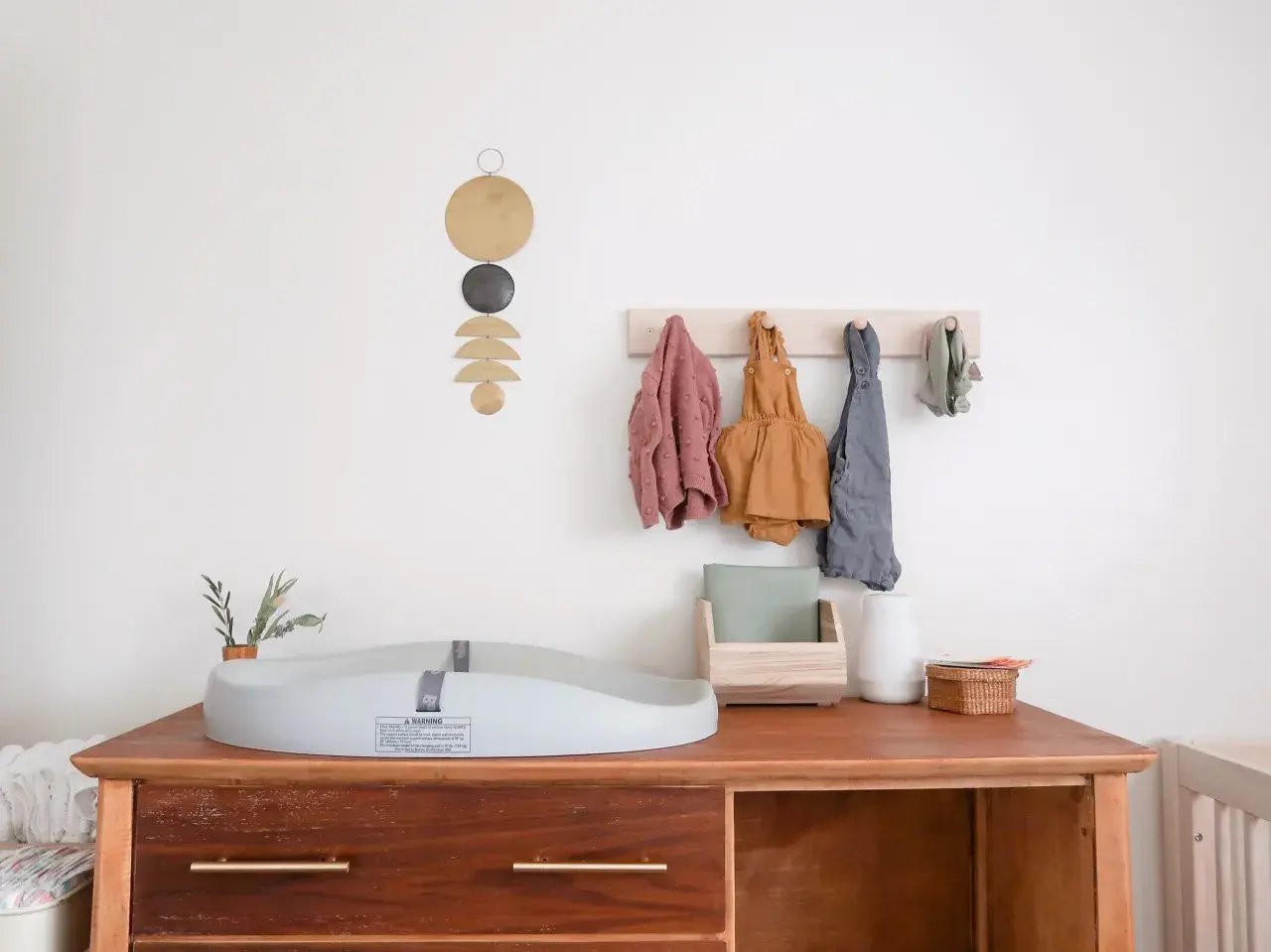
A nursery corner has to do more than look cute. The right setup can hold sleep, feeding, changing, and storage in one small footprint without making the room feel cramped. The best corner nursery ideas solve the practical problems first, then layer in softness, color, and personality.
A nursery corner works best when the sleep zone, storage, and movement all stay simple
- Pick the corner with the cleanest traffic flow. Avoid door swings, window cords, and tight dead ends.
- Keep the sleep area bare and calm. A crib or bassinet, a fitted sheet, and a firm mattress are enough.
- Use vertical storage. Wall shelves, hooks, and baskets free up the floor and make cleaning easier.
- Leave room for night routines. A chair, a side table, and soft light matter more than extra decor.
- Build the style with texture. Wood, linen, woven baskets, and one or two focal pieces do more than a crowded theme.
Choose the corner that makes daily movement easiest
I usually start by standing in the room and mapping the real traffic pattern before I think about colors or decor. The best corner is not always the prettiest one; it is the one that gives you a clear path, room to bend, and enough distance from anything that can turn into a hazard later.
Look for the spot with the fewest interruptions: a wall that is not blocked by a door swing, a window treatment with cords, or a heating vent. If you can, leave about 24 to 30 inches of clear walking space where you will stand, kneel, or reach for supplies. That margin sounds small, but it changes how the corner feels in everyday use.
- Outlet access matters if you need a lamp, sound machine, or monitor.
- Natural light is helpful during the day, but direct sun can make naps harder without blackout coverage.
- Door clearance matters more than people expect, especially once you add a chair or dresser.
- Wall shape matters too; a shallow alcove often works better than a deep, awkward corner.
Once the footprint is clear, the next decision is what the space actually needs to do, because a nursery nook should feel planned rather than squeezed in.

Layouts that make a nursery nook work in real life
When I am planning a small nursery area, I think in layouts rather than decorations. A corner can be built around sleep, feeding, or a compact all-in-one arrangement, and each version has a different tradeoff. That is where many people save time and money, because they stop buying pieces that do not match the actual job of the room.
| Layout | Best for | What to include | Trade-off |
|---|---|---|---|
| Sleep-first nook | Small rooms or room-sharing setups | Crib or bassinet, fitted sheet, blackout shade, very light wall decor | Least decorative, but easiest to keep safe and quiet |
| Feeding corner | Rooms where the sleep space sits elsewhere | Glider or armchair, side table, lamp, basket for burp cloths | Comfortable for feeds, but not a full nursery on its own |
| All-in-one nook | Medium rooms with one clear wall | Crib, dresser or changing top, chair, shelves, storage baskets | Needs tighter editing so it does not feel crowded |
A standard U.S. crib mattress measures 28 by 52 inches, so the sleep piece takes up more room than many people expect. I like to treat the corner like a tiny floor plan, not a decor vignette, because that mindset keeps the room usable once the baby actually arrives. If the nursery corner also needs to become a play area later, choose modular pieces now so you can switch functions without starting over.
That is also why storage has to be intentional, not accidental.
Storage that keeps the nook calm instead of cluttered
Good storage is what makes a small nursery feel calm instead of busy. I prefer storage that stays low-friction: easy to open, easy to refill, and easy to wipe down. If the setup takes too many steps, it gets ignored fast.
Go vertical first
Wall shelves, peg rails, and hooks let you use height instead of floor space. Shallow shelves, around 10 to 12 inches deep, usually work better than bulky cube units because they hold the essentials without making the corner feel heavy. I like one higher shelf for items you do not touch every day and one lower shelf or basket zone for things you reach all the time.
Keep one surface dedicated to the nightly reset
A dresser top, changing table, or sturdy side table should hold only the items you need in one fast motion: diapers, wipes, cream, spare onesies, and maybe a small trash bin nearby. I am strict about this because flat surfaces are where clutter multiplies. If the top becomes a landing zone for mail, toys, and extra decor, the corner stops feeling like a nursery very quickly.
Read Also: Montessori Bathroom- Create an Independent Child's Space
Use baskets for the messy categories
Soft storage is underrated. Woven baskets hide spare swaddles, blankets, and laundry while making the room feel warmer than plastic bins usually do. They also help if the corner later shifts into a play area, because toys can move into the same baskets without changing the whole layout.
Once the room can hold its gear, the next filter is safety, especially around sleep.
Safety choices I would not compromise on
The safest nursery corner starts with the sleep space itself. The AAP and CPSC keep the guidance simple: use a firm, flat sleep surface with a fitted sheet and keep the crib free of pillows, blankets, bumpers, and stuffed toys. That bare setup may look plain, but it is the right place to be minimal.
- Keep the crib away from windows so the baby cannot reach blinds, drapes, or cords.
- Anchor tall furniture such as dressers and bookcases, especially if the room will later become a playroom too.
- Move cords out of reach for lamps, monitors, chargers, and sound machines.
- Avoid heavy decor above the crib unless it is securely mounted and very light.
- Use cordless window coverings whenever possible, because that removes one of the easiest hazards to prevent.
I also keep the monitor and lighting practical rather than decorative. A soft lamp, a dimmable night light, and a clear path to the crib matter more than themed accessories. Safety does not have to make the room feel cold; it just asks you to be disciplined about what stays within reach.
Once the room is safe, you can make it feel warm without adding visual weight.
Style the corner so it feels finished without getting busy
When a nursery corner looks flat, people often try to fix it with more objects. I usually go the other way. The best visual results come from a limited palette, a few thoughtful textures, and one strong focal point. That keeps the space soft enough for a baby room and clean enough to survive real life.
- Warm neutral plus natural wood is the easiest long-term choice. It ages well and does not fight with future toy storage.
- Soft color blocking can make a corner feel intentional without covering every wall. A painted band, arch, or removable wallpaper panel works well here.
- Texture over pattern is safer in a small corner. Linen curtains, a knit blanket, and a woven basket add interest without visual noise.
- One focal piece is usually enough. A framed print, a name sign, or a simple mobile can anchor the nook, but all three together usually feels crowded.
If the nursery corner will double as part of a playroom later, I would lean even more on durable finishes and washable fabrics. That way the room can take a few hits without needing a redesign every six months. The more flexible the materials, the longer the setup stays useful.
The last piece is deciding where money actually makes a difference.
What I would buy first when the budget is tight
Budget pressure usually leads people to buy decor first because it is the most visible. I would reverse that order. Spend on the pieces that change daily use, then add style after the layout works. A room that functions well will look better even with very simple finishing touches.
| Priority | Buy now | Wait on | Why it matters |
|---|---|---|---|
| 1 | Crib or bassinet, firm mattress, fitted sheet | Theme decor and extra accessories | The sleep setup is the core of the room |
| 2 | Blackout shade or cordless window covering | Fancy curtains and decorative trim | Light control improves naps and keeps the corner calmer |
| 3 | Chair or glider with enough support for long feeds | Oversized recliners or statement seating | Comfort matters more than style during night routines |
| 4 | Storage baskets, wall shelves, or a dresser | Matching furniture sets | Storage prevents clutter from taking over the room |
| 5 | Rug, art, and small decor | Anything purely decorative | These finish the room after the layout is already working |
If the room is especially tight, I would avoid oversized furniture with arms that eat into the walkway. A compact chair around 30 to 36 inches wide is often easier to live with than a bulky recliner, and it still gives you the comfort you need. Small choices like that are what keep a nursery corner from feeling cramped six months later.
A finished nursery corner should feel quiet before it feels styled
Before I call the corner done, I do one last test: I walk through it with a basket in my hands, sit in the chair, and check whether I can reach the things I need without twisting around furniture. If that feels smooth, the corner is doing its job. If it feels awkward, I remove one item instead of adding another.
The strongest nursery corners are usually the simplest ones. They give you room to move, room to store the essentials, and room to breathe, which is exactly what a baby space needs. If the area still feels busy at the end, the fix is rarely more decor; it is usually one cleaner line, one clearer surface, or one less object competing for attention.
