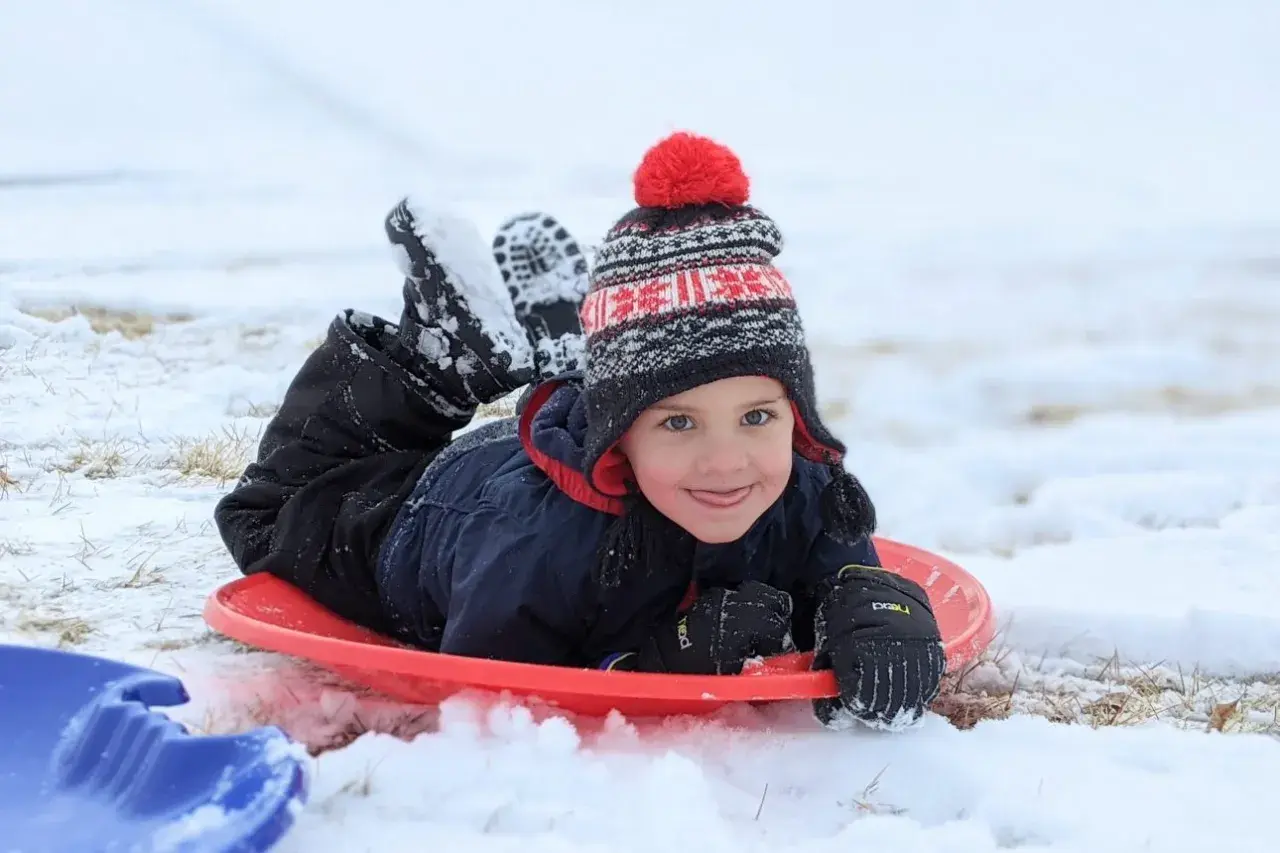
Winter changes the rhythm of baby play. Shorter days, colder air, and more time indoors usually call for simpler routines, not more complicated ones. The best things to do with a baby in winter are the ones that support movement, language, and bonding without overloading a tiny nervous system.
The safest winter play starts with short, repeatable routines
- Indoor play matters most on the coldest days, and it works best in short bursts.
- Tummy time, mirror play, singing, and reading do more for development than most flashy toys.
- Babies can go outside briefly when the weather cooperates, but thin layers are safer than bulky coats.
- One good setup usually beats a room full of toys in winter.
- Baby cues matter more than any schedule; fussing, turning away, or getting chilled are signals to stop.

Indoor play that works when the temperature drops
When I plan winter play for infants, I start with the basics: floor time, face time, and repeatable sounds. HealthyChildren.org points out that supervised tummy time is important for physical development, and that is still true when the weather keeps everyone inside. The point is not to keep a baby busy for an hour. The point is to give them small, meaningful experiences that build strength, attention, and comfort with familiar routines.
| Activity | What it supports | Why it works in winter | My note |
|---|---|---|---|
| Tummy time on a blanket or your chest | Neck control, shoulder strength, rolling prep | It needs very little space and no special weather | Start with short sessions and stop before frustration takes over |
| Mirror play | Visual tracking, curiosity, self-recognition | Works well even on low-energy days | Use an unbreakable baby-safe mirror near floor level |
| Cloth book time | Language exposure, attention, hand coordination | Books are calm, portable, and easy to repeat | Point, name, pause, and let the baby look or touch |
| Singing and pat-a-cake | Auditory development, rhythm, bonding | Perfect for a warm room and a sleepy afternoon | Repetition matters more than performance |
| Peekaboo with hands or a soft cloth | Object permanence, social turn-taking | Easy to do while waiting for a nap or bottle | Keep it gentle and stop if your baby looks overwhelmed |
| Reaching for a soft rattle or crinkle toy | Grasping, cause and effect, coordination | Useful when the floor time window is short | One or two toys is enough; a basket full is usually too much |
I prefer activities that can be repeated all week without much setup. Babies learn from the pattern as much as from the toy itself, and that predictability is especially useful when weather, naps, and feeding times are all a little off. Once those basics are in place, it becomes easier to tailor play to your baby’s stage.
Age-appropriate sensory games that feel like play, not therapy
Winter is a good time to think in stages. A newborn does not need the same kind of stimulation as a baby who is already rolling or sitting, and that matters more than whether the activity is technically “seasonal.” I usually keep the environment simple and choose one sensory idea at a time so the baby can actually process what is happening.
Newborns to 3 months
For the youngest babies, I focus on faces, voice, and contrast. Black-and-white cards, a parent’s face, a soft song, or a slow puppet movement can hold attention without overstimulating. These early sessions are less about entertainment and more about helping your baby notice patterns, track movement, and settle into shared attention.
4 to 6 months
At this stage, reaching becomes interesting. A soft toy held slightly to the side, a crinkly square, or a baby-safe mirror on a mat gives your baby something to track and then grab. I like this stage because the feedback loop is obvious: they reach, they make contact, they try again. That is the beginning of coordination.
Read Also: Gross Motor Skills Activities for School - Boost Learning!
7 to 12 months
Older babies usually want more freedom to move. A basket of safe toys, a rolling ball, peekaboo with a blanket, or a simple rhythm game gives them a chance to practice object permanence and turn-taking. If your baby is pulling up or crawling, I would also use the room itself as part of play: a pillow edge, a soft tunnel, or a short path across the floor can be more interesting than another noisy gadget.
The useful rule here is simple: match the activity to the baby, not the calendar. That is what keeps winter play calm instead of chaotic, and it leads naturally into the equipment that makes all of this easier to repeat.
The toy and nursery setup that makes winter easier
Winter play is smoother when the room is ready before the baby is tired. I am a fan of a small, thoughtful setup rather than a crowded toy bin. A few well-chosen items make it easier to repeat play, switch activities quickly, and keep the space comfortable for floor time.
| Item | Why I like it | What to look for |
|---|---|---|
| Play mat or thick blanket | Creates a clean, comfortable floor zone for tummy time and rolling | Easy to wash, soft but not too plush, large enough for movement |
| Unbreakable baby mirror | Encourages visual tracking and face interest | Shatterproof surface and a stable backing |
| Cloth or board books | Good for chewing, grabbing, pointing, and repeated reading | Strong pages, simple pictures, high contrast for younger babies |
| Soft rattle or crinkle toy | Teaches cause and effect and rewards reaching | Lightweight, easy to grip, and free of small parts |
| Teether | Useful when your baby wants to mouth everything | Baby-safe materials and a shape that is easy to hold |
| Sleep sack | Keeps sleep routines warm without loose blankets | Proper size and a comfortable weight for the room |
According to HealthyChildren.org, thin layers are safer than bulky clothing for babies, and a wearable blanket is a sensible winter staple for sleep. I think that same mindset applies to play: choose items that are simple, safe, and easy to use again tomorrow. The more friction you remove, the more likely the activities are to happen consistently.
Getting outside without overdoing it
Cold weather does not automatically rule out outdoor time. A short stroller walk, a quick porch sit, or even ten minutes by a bright window can be enough to change the mood of the day. I keep outdoor baby time brief and controlled, because infants lose heat faster than adults and they cannot tell you when they have had enough.
HealthyChildren.org recommends several thin layers for cold weather and notes that one more layer than an adult would wear is generally the right rule of thumb. It also warns against bulky coats in car seats, which can create a dangerous fit; thin layers with a blanket over the buckled harness are the better move.
- Use thin, breathable layers instead of one heavy outfit.
- Add a hat and mittens if the air is cold and your baby tolerates them.
- Keep stroller outings short if the wind is sharp or the air feels wet.
- Skip long exposure when your baby’s cheeks get very red, their body feels cold, or they start getting oddly quiet.
- Use the window as a backup view of the world when the weather is too harsh for a real outing.
For some families, the best “outside” activity is simply narrating the snow, trees, or traffic from indoors. That still gives babies movement, language, and visual input without the strain of a full winter outing, which makes it a practical bridge to a more predictable day.
A winter routine that keeps the day from collapsing
I do not try to invent a brand-new activity for every wake window. In winter, that is unrealistic. A small routine repeated with minor variations usually works better because babies benefit from familiarity, and parents benefit from not having to make every decision from scratch.
| Part of the day | Simple activity | What it gives your baby |
|---|---|---|
| Morning wake window | Diaper change, song, and a short tummy time session | Movement, voice, and a clear start to the day |
| Late morning | Mirror play and a cloth book | Visual attention and early language exposure |
| Midday | Stroller loop, porch time, or window watching | Fresh air or a change of scene without overplanning |
| Afternoon | Texture basket, reaching game, or floor time | Grasping practice and sensory variety |
| Evening | Gentle massage, bath, book, sleep sack | Calming cues that help the baby settle |
If the day goes sideways, I return to the same sequence rather than trying to rescue it with more stimulation. That is usually the mistake: parents think winter boredom needs bigger entertainment, when babies often do better with the same few cues repeated in a steady order.
The few winter play ideas I would keep if space and budget were tight
If I had to narrow winter baby play down to the essentials, I would keep five things: a floor mat, a baby-safe mirror, one cloth book, one soft toy that is easy to grasp, and one calming bedtime routine that ends with a sleep sack. That is enough to cover movement, language, sensory input, and rest without filling the house with clutter.
I would also keep my expectations realistic. Babies do not need a packed schedule to develop well, and winter does not have to feel like a long wait for spring. The best rhythm is the one you can actually repeat: a little floor time, a little voice time, a little fresh air when the weather allows, and a lot of attention to your baby’s cues. If your baby is premature, medically fragile, or unusually sensitive to cold, it is smart to be more conservative and check with your pediatrician before stretching outdoor time.
