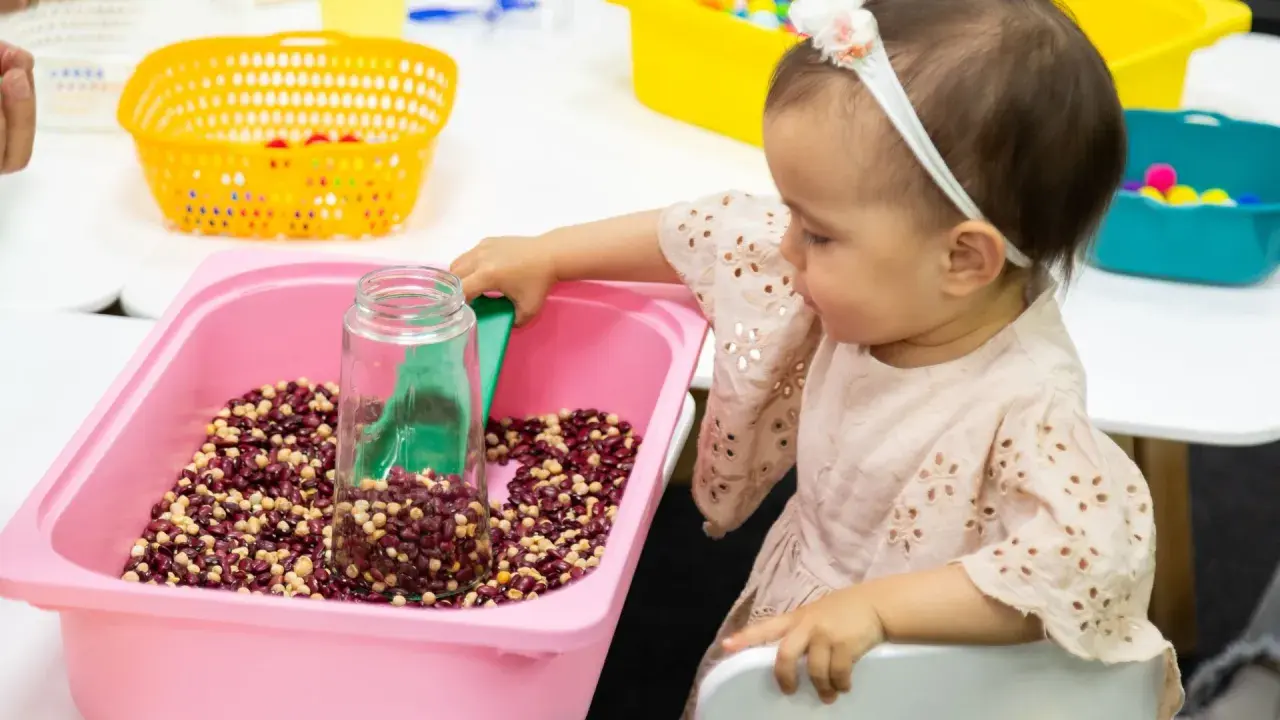
A winter sensory bin is a simple way to turn indoor play into something focused and genuinely useful: children scoop, pour, sort, hide, and discover textures that feel seasonal without needing a complicated setup. I like this kind of play because the best versions are inexpensive, flexible, and easy to adapt for toddlers, preschoolers, and early elementary kids. In this guide, I break down what the bin should do, which materials work best, how it supports development, and where safety matters most.
The fastest way to make it work
- Keep the base simple: one main filler, a few tools, and 3 to 6 themed objects are enough.
- Choose materials by age, especially if a child still mouths small objects.
- Use the play to build fine motor control, language, sorting, and pretend play.
- Contain the mess with a tray, rimmed bin, or large mat underneath.
- Rotate one or two elements instead of rebuilding the whole setup every time.
What a winter-themed bin is really doing
At its core, this kind of play is a hands-on invitation to explore a season through texture, movement, and pretend play. The container itself is not the point; the point is giving children a low-pressure space to touch, scoop, transfer, compare, and invent stories around a winter scene. I think the best bins feel open-ended rather than overdesigned, because children stay engaged longer when they can decide whether the “snow” becomes a mountain, a road, a rescue mission, or just something worth pouring from one cup to another.
That matters because open-ended play gives children room to practice attention, decision-making, and problem-solving without feeling like they are completing a worksheet in disguise. Once you think of it as an invitation to explore, the choices get easier, and that leads directly to the developmental benefits.
Why it supports play and development
The American Academy of Pediatrics has long linked play with language, problem-solving, and social development, and a good sensory bin puts those skills to work in one place. I see the biggest gains when children are allowed to manipulate materials at their own pace instead of being rushed through a set of instructions.
- Fine motor control improves when children pinch pom-poms, scoop filler, or use tweezers and tongs.
- Bilateral coordination gets practice when one hand stabilizes a cup while the other pours or transfers.
- Language growth happens naturally when adults narrate actions with words like cold, fluffy, heavy, sparkly, and hidden.
- Early math ideas show up through sorting, counting, comparing size, and matching colors or shapes.
- Self-regulation can improve because sensory play often gives children a calm, repetitive task that helps them settle.
What I like most is that the learning is embedded in the play instead of layered on top of it. A child who is busy rescuing animals from fake snow is also practicing focus, pattern recognition, and controlled hand movements, which is exactly why the setup deserves a bit of planning before you choose the materials.

Materials that create the winter feel without making a mess
The best materials are the ones that feel seasonal, hold attention, and do not create a cleanup job that ruins the fun. I usually start with one tactile base and then add a small number of themed objects so the bin stays readable instead of crowded.
| Material | Texture and effect | Best use | Tradeoff |
|---|---|---|---|
| Baking soda | Soft, dry, and snow-like | Toddlers and preschoolers | Spills easily, but it is inexpensive and simple to reset |
| White rice | Scoopy and grainy | Older toddlers and preschoolers | Not ideal for children who still mouth small items |
| Cotton balls | Light, fluffy, and easy to grasp | Sorting, counting, and pretend snow | Feels less realistic, but it is very easy to clean up |
| Kinetic sand | Moldable and satisfying to squeeze | Preschoolers and early elementary kids | Best kept away from water and wet add-ins |
| Shredded paper | Loose, airy, and blizzard-like | Short play sessions or movement-heavy play | Can scatter, so it works best in a rimmed tray |
| Ice cubes or sealed ice packs | Cold and temporary | Sensory contrast and quick science play | Needs close supervision and loses novelty fast |
For add-ins, I prefer larger items such as plastic snowflakes, faux pinecones, scoopers, cups, and arctic animals. According to the U.S. Consumer Product Safety Commission, small parts are a choking hazard for children under 3, so I avoid loose beads, tiny gems, and miniature décor in toddler bins. Once the filler is right, the rest of the setup becomes much easier to manage.
How I build one that stays interesting
I keep the process intentionally boring, because the play itself should carry the excitement. A good setup usually takes only a few minutes, and I have found that restraint matters more than variety.
- Choose a bin with enough depth to contain the filler and the tools.
- Pick one base material and keep the texture consistent.
- Add 3 to 6 themed objects that support a single idea, such as rescue, sorting, or building.
- Include 1 or 2 tools like a spoon, a small cup, tongs, or a scoop.
- Place a tray, towel, or mat underneath to catch spillover.
- Model one action, then step back and let the child take over.
- Rotate one piece at a time when interest starts to fade.
If I already own the bin and tools, a reusable setup often lands somewhere around $10 to $25, though specialty fillers or classroom quantities can push that higher. I would rather spend a little more on a sturdy bin and useful tools than on decorative clutter that gets ignored after the first five minutes. After that, the main question becomes which version fits the child’s age and attention span.
Choosing the right version by age
The age of the child changes the whole design. A setup that works for a four-year-old can be too frustrating, too small, or too tempting to mouth for a younger toddler, so I adjust the bin before I adjust my expectations.
| Age range | Best setup | What to emphasize | What to avoid |
|---|---|---|---|
| 1 to 2 years | Larger cotton balls, big scoops, bowls, and wide open space | Scooping, dumping, and simple cause-and-effect play | Tiny figures, mixed fillers, and anything easily swallowed |
| 3 to 4 years | Baking soda, rice, fake snow, or kinetic sand with themed toys | Language, pretend play, sorting, and fine motor control | Overstuffed bins and too many competing textures |
| 5 to 6 years | More detailed small-world scenes, rescue missions, or building tasks | Problem-solving, counting, story-making, and pattern play | Activities that are so simple they feel finished in a minute |
Winter play setups that are actually worth trying
Not every themed bin earns its keep. I prefer setups that create a clear action, because children understand them faster and return to them more often.
- Arctic animal rescue uses fake snow or rice with small animal figures hidden inside. It is one of the best setups for language, because you can talk about where the animals live, how they move, and what they need.
- Snowman workshop uses cotton balls, round white pieces, and larger accessories for stacking or building. It works well when you want a simple fine motor challenge without a lot of mess.
- Hot cocoa tray swaps in brown and white materials, cups, and spoons for pretend drink-making. It is especially good for role play, though I keep it age-appropriate and skip tiny marshmallows for younger children.
- Ice and melt station uses ice cubes in a shallow tray with salt, droppers, or warm water for older children. It feels more like a mini science activity, which makes it a strong option when a child wants a little more cause and effect.
I like these ideas because each one gives the child a job, not just a texture. That small difference keeps the bin from feeling random, and it also makes the next section easier to understand, because most frustrations come from design mistakes rather than from the idea itself.
Common mistakes that make the bin fall flat
When a sensory bin is disappointing, the problem is usually not the theme. It is usually the setup.
- Using too many fillers at once, which makes the bin feel chaotic instead of focused.
- Choosing objects that are too small for the child’s age.
- Leaving out tools, so the child has nothing to scoop, pour, or transfer with.
- Making the bin look beautiful but not giving it a purpose.
- Ignoring the floor plan, which turns a 10-minute activity into a cleanup project.
- Keeping the same exact setup out too long, so the novelty disappears.
I have found that one or two strong sensory differences work better than six competing ones. If the setup feels calm, clear, and easy to explore, children usually settle into it quickly, which is why I tend to finish with a simple starter version rather than a complicated one.
A starter setup I would use first
If I were building one from scratch for mixed-age siblings, I would start with a medium bin, a baking soda base, a handful of large cotton balls, a few plastic snowflakes, one scoop, and two cups. That combination gives you texture, color contrast, and enough loose structure for sorting or pretend play without overwhelming the child.
- Base: baking soda or another soft white filler
- Add-ins: 3 to 5 large winter-themed pieces
- Tools: one scoop and one transfer cup
- Optional prompt: hide and find, sort by shape, or build a small snow scene
That kind of restraint is usually what makes the play last: the materials stay interesting, the cleanup stays manageable, and the child can return to the bin with a different goal each time.
