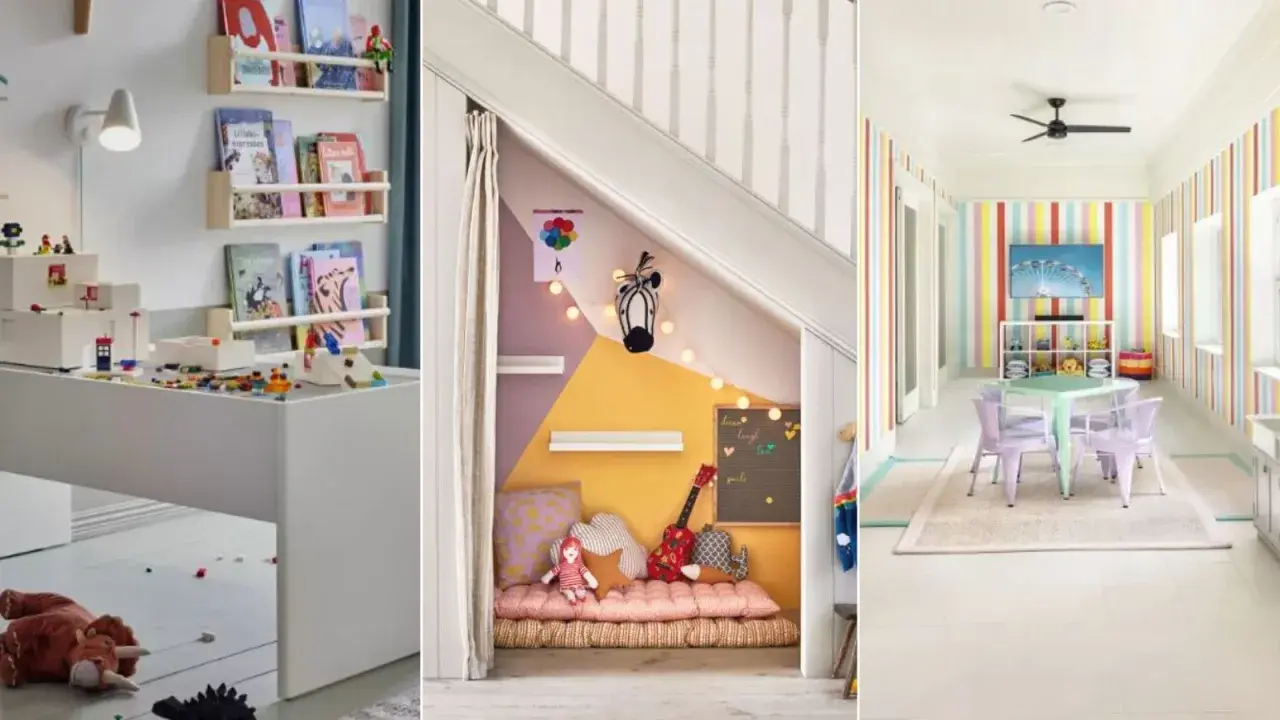
A calm playroom is not empty; it is edited. The best minimalist playroom ideas focus on a space where children can see what they have, reach it easily, and put it away without a battle. In 2026, I would rather build that kind of room with a few smart decisions than fill it with decor that looks tidy for one afternoon.
What makes a calm playroom work
- Start by reducing the toy count and categories, not by buying more bins.
- Keep the floor open and place the most-used storage at child height.
- Use a quiet base palette, then add warmth with wood, textiles, and one accent color.
- Rotate toys so the room feels fresh without becoming crowded.
- Design for your child’s age now, but leave room to adapt later.
Start with a layout that leaves room to play
I always begin with the floor plan, because a minimalist playroom fails fast when furniture gets in the way of movement. The goal is not to decorate every wall; it is to create one clear play surface and then give every other item a job.
There are three layouts I reach for most often:
- One-wall storage with an open center - best for small rooms, because shelves, bins, and books stay on one side while the middle stays free for blocks, tracks, puzzles, or gross-motor play.
- Two-zone setup - one side for active play and one quieter corner for reading or art. This works well when you want the room to feel calmer without making it rigid.
- Nursery-to-playroom transition - keep the crib or glider on one end, then reserve the other end for toys and a floor rug. This is the cleanest solution when the room has to serve two stages at once.
If a room feels cramped, I usually remove furniture before I add storage. A chair that is never used or a toy chest that swallows the whole wall can do more harm than a few visible toys ever will. Once the layout is clear, the next step is deciding how much should actually be out at once.
Use fewer toy categories and make rotation part of the room
Minimalism is much easier when you stop trying to display every toy at once. I prefer a small, edited mix of categories: one or two building toys, one pretend-play set, one creative basket, a handful of books, and one soft item like stuffed animals or a doll. That is enough for variety without turning the room into visual noise.
I also keep one rule in mind: fewer visible options usually mean deeper play. A University of Toledo study on toddlers found that children played longer and more creatively when they had four toys instead of 16, which is why rotation belongs in any well-designed playroom. I do not treat that as a rigid number for every child, but I do treat it as a useful reminder that abundance is not the same as better play.
Here is the system I find easiest to live with:
- Keep one current bin for each major category.
- Store duplicates, oversized sets, and seasonal toys somewhere else.
- Swap out one or two categories every one to three weeks, depending on how quickly your child loses interest.
- Leave some space on each shelf so the room never looks packed.
That rotation habit is what keeps a minimalist room from feeling stale. The next question is where the toys should live so the system actually works for a child, not just for an adult looking at the room.
Choose storage that children can use without help
Storage is the difference between a room that stays simple and one that slowly drifts back into clutter. I like storage that is low, visible, and easy to reset. If a child cannot tell where things go, the system will not survive the first busy week.
| Storage choice | Best for | Trade-off | My take |
|---|---|---|---|
| Open shelves | Books, a few rotating toys, display pieces | Require restraint because everything is visible | The best option when you want the room to feel airy and child-friendly |
| Labeled bins | Blocks, dolls, craft supplies, puzzle sets | Hide contents, so they need clear labels or picture tags | Best for small parts and categories that get messy fast |
| Closed cabinets | Backstock toys, fragile items, off-rotation sets | More expensive and less intuitive for children | Useful when the playroom doubles as a living room or nursery |
| Rolling cart | Art, sensory play, sticker supplies, Play-Doh | Can become a clutter magnet if it holds too many categories | Great only when it stays tightly edited |
I usually prefer a mix of open shelves and closed bins rather than one giant system. Open shelves make the room feel lighter, while bins hide the pieces that would otherwise create chaos. Picture labels also help more than many parents expect, especially for toddlers who cannot read yet but can still match images with objects.
Once the storage is child-proof in the practical sense, the room can start to look good too. That is where color, texture, and light matter more than people think.
Pick a quiet palette without making the room feel cold
A minimalist playroom should feel calm, not clinical. I like a base of warm white, oat, sand, soft gray, muted sage, or dusty blue, then I bring in a little contrast through wood and textile texture. That combination keeps the room relaxed while still feeling lived in.
These choices tend to work well:
- Walls - warm white or a soft neutral if you want the room to stay bright.
- Flooring or rug - natural fiber, washable cotton, or a low-pile rug that can handle crumbs and toy traffic.
- Storage - wood, matte white, woven baskets, or fabric bins in one coordinated family of colors.
- Accent color - one tone only, repeated in art, a cushion, or one toy category.
The mistake I see most often is trying to make the room interesting with too many colors at once. That usually creates more visual clutter than actual warmth. If the room feels flat, I would add texture before I add color: a woven basket, a soft rug, a linen curtain, or a wooden stool will do more than another bright accessory.
Color gets easier when the room matches the child using it, which is why the next step is adapting the setup to age and play style rather than copying one perfect Pinterest room.
Match the room to age and play style
A playroom for a toddler, a preschooler, and two siblings sharing space should not look identical. The room should reflect how the child actually plays. When I design for real families, I think in stages, not aesthetics alone.
| Stage | What to prioritize | Example setup |
|---|---|---|
| Toddlers | Floor access, soft edges, simple categories | A low shelf with four to six toy options, a rug, board books, and one pretend-play basket |
| Preschoolers | Imagination, open-ended play, easy cleanup | Building blocks, dress-up storage, a small art station, and a reading corner |
| Mixed-age siblings | Separate small parts from big-body play | One shared open area, one high shelf for tiny pieces, and one labeled bin per child for favorite items |
If your child loves movement, I would give the room one physical element before I add more toys: a balance board, a soft climber, a tunnel, or a clear strip of floor for jumping and crawling. If your child prefers quiet work, then a table, an easel, or a reading nook will matter more than an extra decorative theme. The key is to support the child’s natural pattern instead of forcing a room that looks stylish but gets ignored.
That also means being honest about what does not belong in a minimalist room, because a few common mistakes can undo the whole effect.
Skip the mistakes that make minimalist rooms feel cluttered anyway
I see the same problems repeated in rooms that were meant to feel simple but never quite do. The room is not failing because it lacks decor; it is failing because too many things are competing for attention.
- Buying storage before editing toys - this usually creates a prettier version of the same clutter.
- Overfilling shelves - every shelf does not need to be styled. Leave breathing room.
- Using too many open bins - open bins are practical, but too many of them make the room look busy fast.
- Mixing every color and finish - consistency matters more than matching every piece exactly.
- Forcing decorative themes - safari, rainbow, boho, and space themes can all work, but not all at once.
- Keeping tiny pieces at floor level - if the child can dump it easily, the room will look messy quickly.
One more thing: a minimalist playroom is not the same as a nearly empty room. Children still need visual cues, invitations to play, and a few chosen objects that look special. The goal is clarity, not deprivation. That distinction matters, because the last step is making the room easy to maintain instead of just beautiful on day one.
Keep the room simple after the setup is done
Once the room is finished, I treat maintenance as part of the design. A room that takes 30 minutes to reset will not stay minimalist for long in a busy house. A room that resets in ten minutes can survive real family life.
Here is the budget range I usually think in for a small U.S. playroom refresh, depending on how much you already own:
| Goal | Typical budget | What it covers |
|---|---|---|
| Low-cost reset | $0 to $100 | Decluttering, moving existing furniture, relabeling bins, and using what you already have |
| Basic refresh | $150 to $500 | One shelving unit, a rug, a few coordinated bins, and simple wall storage |
| More built-out setup | $600 to $1,500+ | Better furniture, improved lighting, paint, custom storage, or built-ins |
My practical reset routine is simple: return toys to their home each night, keep one backstock bin for each category, and reassess what is being ignored every few weeks. If a toy has not been touched in a while, it probably belongs in rotation rather than on the shelf. If a shelf keeps getting messy, the category on that shelf is too broad.
When I strip the whole process down, the formula is straightforward: edit the toys, keep the storage low and obvious, and leave enough empty space for play to happen naturally. That is what makes a minimalist playroom feel useful instead of merely neat.
