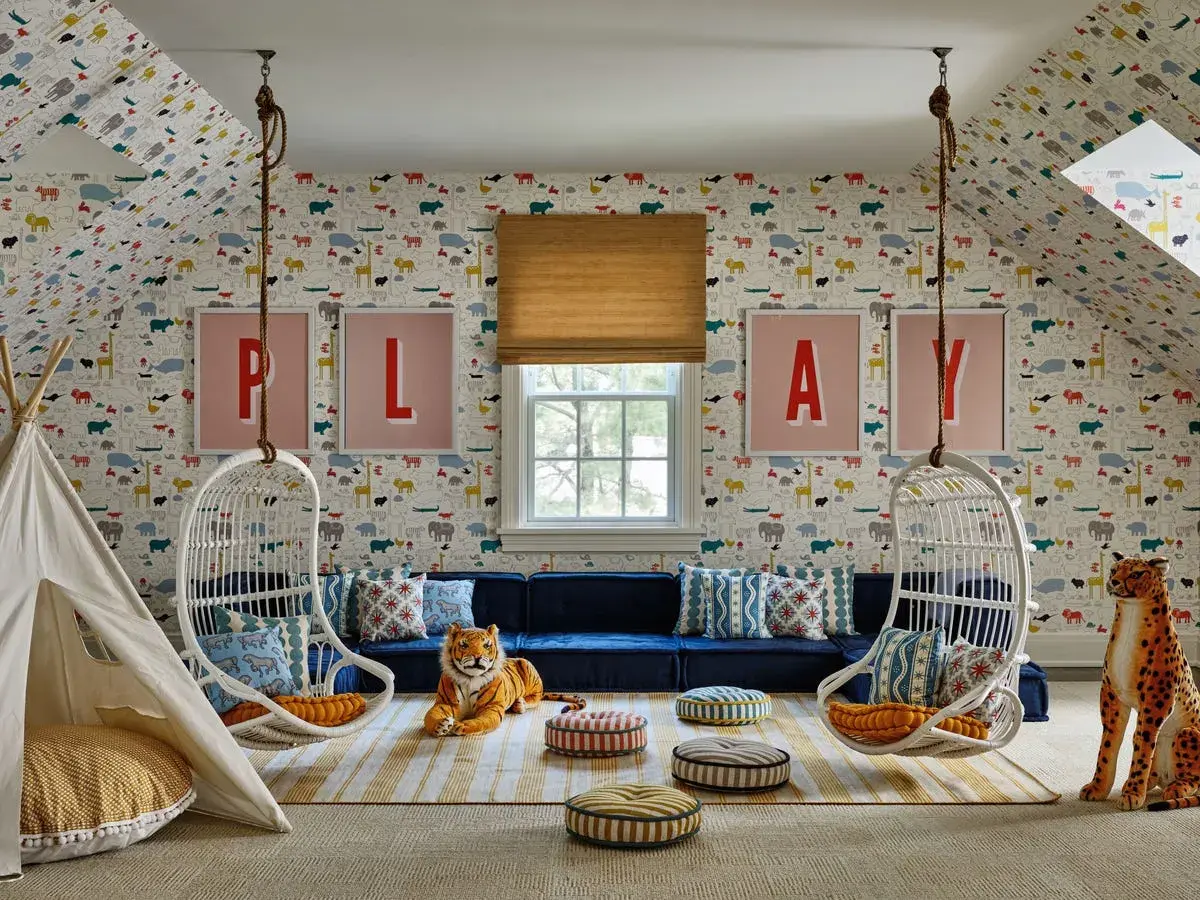
A thoughtful playroom set up does more than keep toys off the floor. It should make play easier, cleanup faster, and supervision less exhausting. In this guide, I focus on the decisions that matter most: layout, storage, safety, age fit, and where the money actually makes a difference.
The essentials to get right before you buy anything
- Start with the child’s age and the room’s job, because a nursery-playroom combo needs different choices than a space for preschoolers.
- Use zones so reading, active play, art, and storage do not compete with each other.
- Keep storage low, visible, and labeled so children can reset the room without help.
- Anchor tall furniture and manage cords before adding decor or extra toys.
- Spend first on the basics: floor protection, storage, lighting, and safety hardware.
What a good playroom setup has to do
When I plan a playroom, I do not start with color or theme. I start with function. The room has to answer a few simple questions: Who uses it, how old are they, and how much of the day will happen here? A nursery-playroom combo needs a calmer layout and more adult access, while a room for older toddlers or preschoolers can lean harder into open floor space and independent cleanup.
That is why I think of the room as a movement pattern, not a decoration project. Children need room to spread out, a clear place to drop things when they are done, and a path that does not force them to weave around furniture. If the room also has to work as storage for seasonal toys, books, or even a few keepsake pieces, I build that in from the beginning instead of hoping I can solve it later with baskets.
The best playrooms feel simple to use, not just nice to look at. Once that purpose is clear, the rest of the layout becomes much easier to decide.

Build zones that keep play easy to reset
I almost always divide a playroom into zones. That sounds more formal than it is. In practice, it just means giving each kind of play a home so the room stays calm instead of turning into one giant toy pile. When everything is mixed together, cleanup becomes guessing. When the room is zoned, the child can see where things belong.
| Zone | What goes there | Why it works |
|---|---|---|
| Active play | Blocks, cars, gross-motor toys, soft mats | Keeps movement in one open area and leaves the rest of the room usable |
| Quiet corner | Books, a floor cushion, a small chair, dimmer lighting | Gives children a place to slow down without leaving the room |
| Art station | Easel, crayons, paper, washable supplies, craft bins | Contains mess and makes it obvious where creative play belongs |
| Storage wall | Low shelves, labeled bins, rotating toy baskets | Makes cleanup faster and keeps the floor open |
| Caregiver spot | Bench, armchair, or narrow sofa | Lets an adult supervise comfortably without sitting on the floor all day |
I like to keep the center of the room as open as possible and push storage to the perimeter. A rug can help define a zone without adding clutter, and even a small reading nook feels more intentional when it is visually separate from the active area. If the room is tight, one strong zone does more than four half-finished ones.
That zoning choice pays off later, because the storage you buy next should match how the room is actually used.
Choose storage children can actually use
Storage is where many playrooms fail. Adults buy containers that look tidy, but children cannot reach them, understand them, or reset them quickly. I prefer storage that matches the child’s height and the toy’s shape. Big, open bins are fine for plush toys and large building pieces. Small sets need smaller compartments or they disappear into a deep bin and never get sorted again.
| Storage type | Best for | Watch out for |
|---|---|---|
| Open bins | Blocks, cars, dolls, mixed large toys | Small pieces can get buried quickly |
| Lidded boxes | Puzzles, games, spare parts, seasonal toys | Young children may need help opening and closing them |
| Cubbies | Books, rotating toy sets, display items | Deep cubbies invite dumping if they are oversized |
| Baskets | Stuffed animals, dress-up clothes, soft toys | Not ideal for tiny accessories or mixed sets |
| Rolling cart | Art supplies, coloring books, small creative tools | Needs to be stable and not overloaded |
| Under-bench storage | Extra toys, blankets, larger games | Works best when adults control what goes inside |
I also like a simple rule: one bin, one category. It is tempting to create a “miscellaneous” basket, but that usually becomes the place where pieces go to disappear. Picture labels help younger children reset the room without reading, while older kids can use written labels just fine. If a child has to climb to clean up, the system is too complicated.
Once the room is easy to reset, the next priority is making sure it is safe enough that the layout does not create hidden risks.
Make safety decisions before the furniture arrives
This is the part I never treat as optional. HealthyChildren.org recommends anchoring furniture and using drawer stops, and I follow that standard in every room with tall storage. The same logic applies to anything a child could climb, tip, or pull forward. Even a room that looks soft and cheerful can become risky fast if the hardware is weak or the furniture is top-heavy.
The CPSC recommends cordless window coverings in rooms where young children are present, and I would make that a priority before I worried about decorative touches. Cords, loops, and dangling pull chains are the kind of hazard that hide in plain sight. If replacing coverings is not realistic right away, move cribs, beds, and furniture away from windows and keep cords out of reach, but treat that as a stopgap, not the final solution.
- Anchor bookcases, dressers, and cube storage to the wall.
- Put heavier toys and books on the lowest shelves.
- Never place a TV on top of a dresser in a child’s room or playroom.
- Keep small parts, small balls, magnets, button batteries, and deflated balloons away from younger children.
- Follow age labels on toy packaging instead of assuming a toy is fine because it looks harmless.
- Use a non-slip rug pad so active play does not turn into a sliding hazard.
If I am setting up a room for a toddler, I assume anything climbable will eventually be climbed and anything reachable will be touched. That mindset sounds strict, but it prevents most of the problems people later blame on bad luck. Safety done early is cheaper than rearranging the room after the fact.
With the safety basics locked in, the smartest next move is matching the room to the age and stage you have right now.
Design for the age group you have now
One of the easiest mistakes in a playroom is designing for the child you had last year or the child you imagine three years from now. I prefer to build for the stage that is actually happening. A playroom for a baby and caregiver needs different furniture and a different mood than a room for a child who spends half the afternoon pretending the sofa is a spaceship.
| Age or stage | Main priority | Smart additions |
|---|---|---|
| Infant or nursery combo | Soft surfaces, calm corners, adult access | Washable rug, nursing chair, low-key toy storage, book ledge |
| Toddler | Open floor, fast cleanup, simple access | Low bins, large blocks, climbing-safe furniture, sensory toys |
| Preschooler | Pretend play, independence, easy reset | Dress-up rail, mini library, art station, play kitchen or table |
| Mixed ages | Separation and fairness | Divided storage, high shelves for small parts, open bins for shared toys |
For siblings of different ages, I separate toys by reach and risk. Small pieces go higher or into closed storage, while the shared, larger toys stay low and open. That keeps the room from turning into a constant tug-of-war. It also makes it easier to rotate pieces without losing track of what belongs where.
Once the room matches the age group, the last big question is budget, because a thoughtful space does not have to mean a full renovation.
What to spend first and where to save
For a modest U.S. playroom refresh, I usually see a realistic starter range of about $150 to $400 if the room already exists and you mainly need storage, a rug, labels, and safety hardware. A more complete setup with better shelving, a reading nook, and a dedicated art area often lands around $500 to $1,500. If you add custom built-ins, carpentry, or specialty finishes, the total can move above $2,000 very quickly.
| Budget tier | Rough spend | What it usually covers |
|---|---|---|
| Starter | $150 to $400 | Rug, bins, labels, wall anchors, one shelf, a few toy categories |
| Balanced | $500 to $1,500 | Better shelving, a reading corner, art storage, upgraded floor covering |
| Custom | $2,000 and up | Built-ins, carpentry, lighting upgrades, and room-specific millwork |
If I only had money for a few items, I would spend in this order: floor protection, storage, wall anchors, and lighting. Decor can wait. Themed wallpaper, matching bins, and cute accessories are easy to add later, but a room without a cleanup system will feel cluttered no matter how nice it looks on day one.
That is why I usually tell people to buy the boring things first. They are the pieces that quietly determine whether the room works on an ordinary Tuesday, not just in a styled photo.
The small details that keep the room working month after month
The last part of a good playroom is not a product; it is a routine. I like to rotate a portion of toys every 2 to 4 weeks so the room feels fresh without needing new purchases. I also leave one shelf or bin intentionally open, because a completely packed system breaks the moment a new favorite shows up.
- Keep a small reset basket near the door for stray pieces.
- Use picture labels for younger children and simple text labels for older ones.
- Store the most-used toys between knee and shoulder height.
- Check monthly for loose cords, cracked bins, and overfilled shelves.
- Revisit the layout when play patterns change, not just when the room looks messy.
If you build the room around zones, reachable storage, and safety first, it will stay useful long after the first wave of toys has changed. That is the real goal of a playroom: not a perfect room, but one that makes play easier, calmer, and easier to live with every single day.
