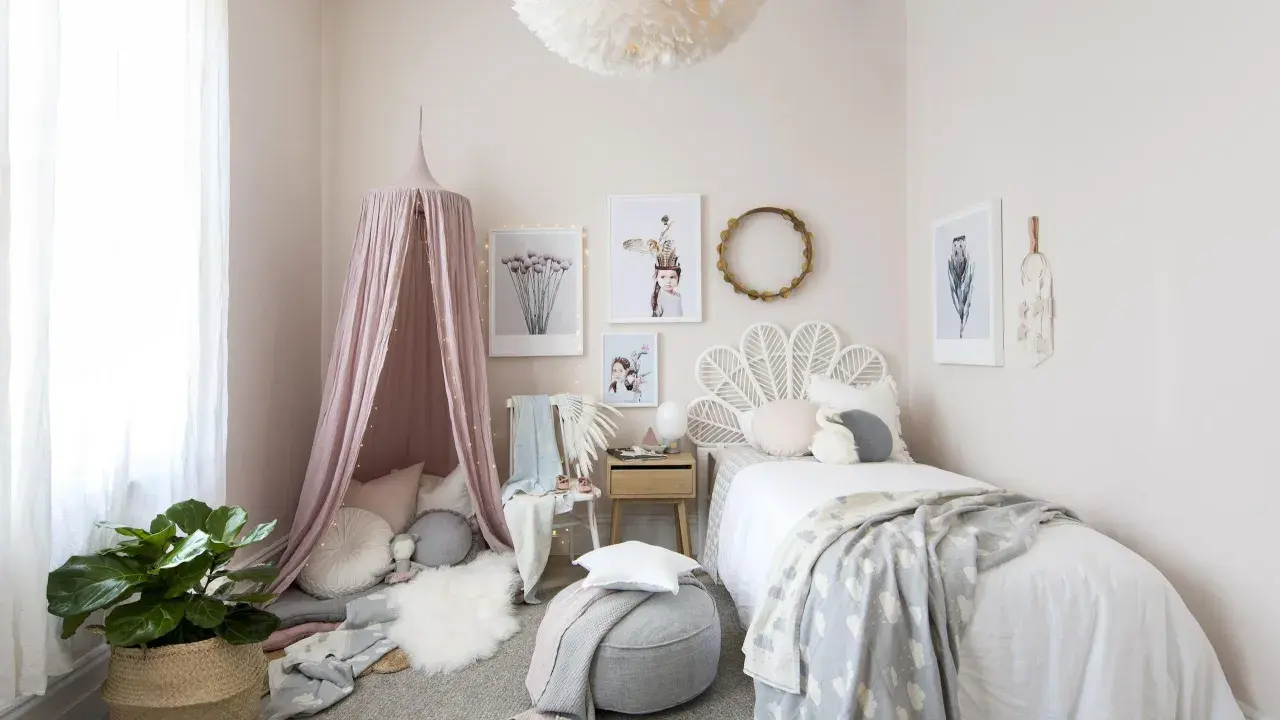
The best baby girls bedroom decorations do three jobs at once: they soften the room, support daily routines, and still feel right when the baby is no longer tiny. I usually design these spaces from the largest decisions down, because wall color, window treatments, and lighting shape the room far more than a shelf full of small ornaments. That approach keeps the nursery calm, practical, and easier to evolve.
What matters most when styling a baby girl's room
- Start with one clear palette so the room feels intentional instead of visually busy.
- Let the biggest elements, like walls, rug, curtains, and light, do most of the decorating work.
- Choose pieces that can grow with the child, not just look cute in the newborn stage.
- Keep the crib zone simple and safety-first, with no loose cords or heavy decor overhead.
- Spend more on the items used every day and save on small accents that are easy to swap later.
Start with a palette that does not fight the furniture
I always begin with color, because it decides whether the room feels airy, sweet, warm, or cluttered before a single accessory goes up. In 2026, the palettes that feel freshest are softer and more layered than the old all-pink nursery formula: blush with ivory and oak, sage with cream and rattan, or dusty rose with warm white and brushed brass.
The trick is to keep the palette small. Two main colors and one material family usually do the job. If the room is modest in size, I lean toward lighter mid-tones instead of stark white, because they hide scuffs better and still feel gentle. If the room has strong natural light, a warmer blush or oat tone often reads richer than a cool pastel.
My rule is simple: the more permanent the surface, the quieter the color should be. That gives you more freedom with the rest of the decor, which is exactly what makes the room easier to style. Once the palette is settled, the decorative pieces themselves become much easier to choose.

Choose the decorative pieces that carry the room
When I style a nursery, I start where the eye lands first: walls, windows, floor, and light. Those four elements do more to shape the room than a dozen tiny objects, and they are also the easiest way to make a space feel finished without making it feel crowded.
| Decor item | Why it matters | Typical U.S. budget | Best use |
|---|---|---|---|
| Wall art or framed prints | Adds personality without taking floor space | $25-$120 each | Color story, focal point, name wall |
| Area rug | Softens the room and makes it feel warmer | $60-$300 | Texture, play surface, acoustic comfort |
| Curtains or cordless shades | Frame the windows and control light | $40-$180 | Softness, privacy, nap-time support |
| Mobile or canopy accent | Creates a gentle focal point | $30-$150 | Over-crib visual interest, if used safely |
| Basket storage | Makes clutter look intentional | $15-$60 each | Blankets, toys, diapers, books |
| Lighting | Sets the mood more than people expect | $40-$200 | Night feeds, soft evening light, warmth |
If I had to prioritize only three purchases, I would choose curtains, a rug, and wall art. Those pieces do the most visible work, and they also make the room feel more polished than several smaller accessories bought in a rush. A good mobile or a name sign can still be lovely, but it should support the room, not carry it.
That balance matters even more when you decide what overall style the room should follow, because a strong theme keeps those pieces from feeling random.
Pick a theme that still works after the newborn stage
The strongest nursery themes are suggestive, not literal. I prefer a room that hints at a mood instead of shouting one. That is why soft florals, botanical prints, swans, clouds, stars, and garden motifs keep showing up in good nurseries: they are sweet without locking the room into one tiny moment of childhood.Here are the directions I reach for most often:
- Soft floral cottage - Gentle florals on wallpaper, bedding, or art create a romantic look that still feels calm when paired with wood and neutral textiles.
- Botanical and airy - Sage, ivory, and leafy prints work well if you want a room that feels fresh rather than overly feminine.
- Storybook animal - Swans, rabbits, lambs, or deer can feel whimsical, but I keep the motif to one or two repeating elements so it does not become busy.
- Modern sweet - Rounded mirrors, scalloped edges, cane texture, and soft pink accents make the room feel current without chasing a trend too hard.
The mistake I see most often is overcommitting to a fully matching set. Matching everything can flatten the room fast. I would rather repeat one or two design notes, like a floral print and a warm wood finish, than buy a set where every item says the same thing. That kind of restraint is what lets the nursery age well, which matters even more if the room will later need to function like a playroom.
Design for the nursery-to-playroom transition
If this room is going to serve more than one phase, build in flexibility from the start. I like decor that can survive floor time, toy baskets, and a toddler who suddenly wants everything within reach. That means washable rugs, durable finishes, open storage at child height, and wall decor that can be removed or reworked later without damage.
These are the decisions that help most:
- Use washable textiles - A washable rug or easy-clean curtain panel saves time later, especially once snacks, spills, and marker pens enter the picture.
- Choose open and closed storage - Baskets hide clutter, while a low shelf holds books and future toys without adding visual noise.
- Keep one wall flexible - Peel-and-stick wallpaper, removable decals, or framed art make it easier to refresh the room without repainting everything.
- Buy furniture that can stay useful - A dresser, glider, or low bookcase can carry into the toddler years if you choose the right scale and finish.
My practical test is this: if a decorative item cannot survive one year of use, fingerprints, or layout changes, it should stay small and inexpensive. That keeps the room from becoming expensive clutter, and it makes the transition to a play-friendly space far smoother. Once the layout is flexible, safety becomes the non-negotiable layer on top.
Keep the room safe without making it feel clinical
This is the one part of nursery design I never treat as optional. Beautiful rooms can still be unsafe if they have loose cords, unstable furniture, or heavy decor placed where it can fall. The good news is that safety and style do not compete as much as people think; the safest choices are often the cleanest-looking ones.
Here is the checklist I would use before calling the room finished:
- Keep the crib away from windows - That reduces exposure to cords, drafts, and anything hanging near the sleeping area.
- Use cordless window coverings - Cordless shades or blinds are the safer default for a baby’s room.
- Anchor furniture to the wall - Dressers and bookcases should not be able to tip if a child pulls up on them later.
- Choose lightweight wall art - Use secure mounting and avoid heavy glass frames over the crib.
- Keep the sleep space clear - No pillows, quilts, stuffed toys, or loose decorative items inside the crib.
- Look for low-VOC finishes - Low-VOC means the paint or finish gives off fewer volatile organic compounds into the air, which is a sensible choice for any baby room.
I also like soft details that are decorative but not hazardous, such as a dimmable lamp, a cool-touch night light, or a fabric canopy that stays well outside the baby’s reach. If a decorative object makes the room prettier only when the baby is not there, it probably belongs elsewhere. After safety, the remaining question is where the money should actually go.
Spend the budget where the room will feel it every day
A nursery does not need a large budget to feel intentional. In the U.S., a simple refresh can sit around $150-$400 if you are careful, while a fuller room with better textiles and a stronger visual plan often lands in the $500-$1,500 range before furniture. Once you move into custom work or built-ins, the total can rise quickly.
| Budget level | What it usually covers | Best for |
|---|---|---|
| Starter, $150-$400 | Wall decals, a lamp, one rug, a few prints, storage baskets | Renters, quick updates, smaller rooms |
| Midrange, $500-$1,500 | Curtains, better rug, accent wall, custom art, stronger lighting, storage upgrades | A room you want to live with for several years |
| Higher-end, $2,000+ | Custom mural, built-ins, drapery, statement light, designer textiles | Long-term nursery design or a room that doubles as a polished bedroom |
I would spend first on the pieces you touch daily: curtains, rug, lighting, and storage. Those items affect comfort and daily friction in a way that small decorative extras never will. Save on decals, seasonal accents, and tiny tabletop objects, because those are easy to change when the child grows or the style shifts. That leaves just one layer to add: the finishing details that make the room feel lived in rather than assembled.
The small details that make the room feel finished
Once the major choices are in place, I like to finish with details that add warmth without stealing attention. A framed birth announcement, a soft throw draped over the chair, a woven basket for books, or one sculptural object on a shelf can make the nursery feel personal very quickly. The point is not to fill every surface; it is to leave enough breathing room that the room can relax.
For baby girl bedroom styling, the details that age best are usually the least literal. A name sign, a floral print, a textured basket, or a scalloped lamp shade tells the story without locking the room into a single trend. If you keep the palette restrained, the theme soft, and the safety rules solid, the room will already feel more complete than most overdecorated nurseries ever do.
That is the version I trust: a space that feels gentle on day one, useful on day 300, and still easy to adapt when the crib eventually gives way to books, toys, and a real little personality.
