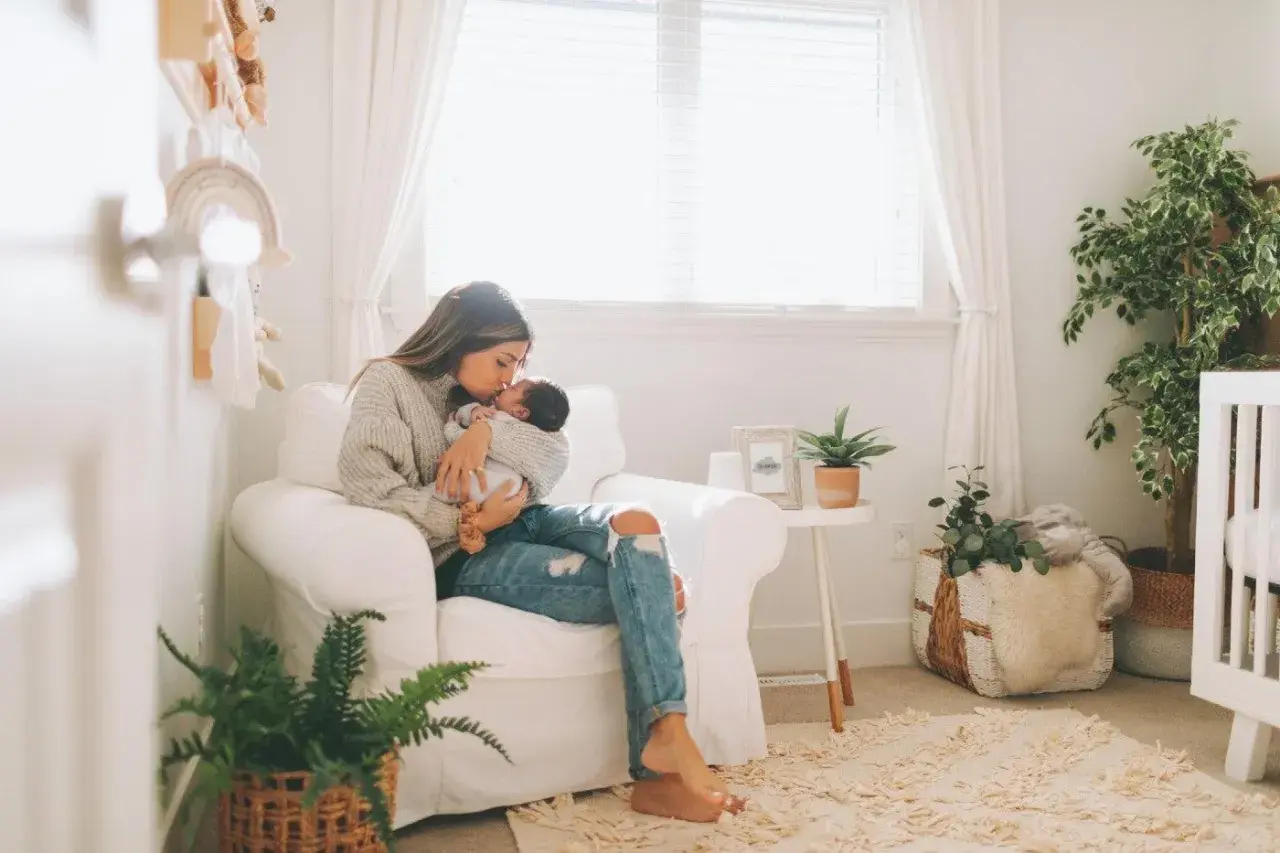
What matters most before you start buying decor
- Choose the room’s job first: sleep only, sleep plus storage, or sleep plus future play.
- Pick one anchor, such as color, wall treatment, or texture, and let the rest support it.
- Warm neutrals, earthy tones, and natural materials are easier to live with than a room full of literal motifs.
- Keep the sleep area uncluttered and put the theme on the walls, rug, and textiles instead of inside the crib.
- Plan storage for books and toys early so the room can evolve without a full reset.
Start with the room’s job, not the style board
When I plan a baby room, I start with the unglamorous questions: How big is the room? Where does the daylight come in? Will this space also be used for guests, naps, or future play? Those answers narrow the design faster than any mood board.
- Measure the room and mark outlets, windows, and the best wall for the crib.
- Decide whether the space needs to handle overnight caregiving, storage, or a future play zone.
- Choose the sleep setup first, because that anchor affects the rest of the layout.
- Only then pick the visual direction, so the room feels intentional rather than assembled at random.
If the room is small, I lean toward fewer patterns and a clearer color story. If it is larger, I give myself more room for texture, layered storage, and a separate corner for reading or floor play. Once the function is clear, the style choices become much easier to trust.

Theme directions that feel current without dating quickly
In 2026, the strongest rooms lean warmer and more tactile. The Bump’s trend coverage points to more color, more texture, and less pressure to make everything beige; that matches what I see in nurseries that age well. I treat the ideas below as palette families and moods, not costumes.
| Style | What it feels like | Best when | Watch out for |
|---|---|---|---|
| Coastal calm | Airy, sandy, soft blue, and woven | You want a quiet room with a light, relaxed mood | Too many anchors, stripes, shells, or obvious nautical props |
| Whimsical woods | Forest greens, oak, leaves, and animal art | You want something warm and easy to grow with | Letting every object become woodland themed |
| Subtle celestial | Moon, stars, ivory, and soft midnight tones | You want a dreamy bedtime mood without heavy decor | Using so much dark color that the room feels smaller |
| Boho natural | Rattan, linen, sage, warm white, and layered texture | You like a handmade look and softer edges | Too many textures fighting for attention |
| Safari retreat | Olive, clay, natural wood, and animal silhouettes | You want a room that can later shift into playroom mode | Cartoon animals everywhere, which can age fast |
| Modern earthy | Terracotta, mushroom, ochre, and walnut | You want the room to feel calm but not bland | Making it so adult that it loses its baby-room warmth |
| Vintage storybook | Heirloom details, watercolor art, and classic illustrations | You want personality and a little nostalgia | Mixing so many old-fashioned touches that it feels staged |
I like these directions because they are specific enough to guide shopping, but broad enough to survive real life. If you want the safest bet, choose one nature-based direction and keep the rest of the room simple. That leaves room for the design to mature with the child, which is the real goal.
Turn the idea into paint, textiles and furniture
A room only feels finished when the big pieces agree with one another. I usually decide the base color family first, then the materials, then the larger furniture, because that order keeps the budget under control and stops me from overbuying small decor.
Choose one dominant color family
A practical version of the 60/30/10 rule works well here: 60 percent base tone, 30 percent supporting tone, and 10 percent accent. It is not a law, but it keeps the room from becoming a pile of unrelated cute things. For example, a warm cream wall can pair with oak furniture, sage textiles, and one rust or navy accent.
Let texture do part of the work
Texture is what keeps a nursery from feeling flat. Linen curtains, a low-pile rug, wood furniture, one woven basket, and a single soft pattern usually read as thoughtful. Ten patterns do not. If the wallpaper is busy, I simplify the bedding and art; if the walls are calm, I can let the rug or chair carry more visual weight.
Read Also: Baby Boy Nursery Ideas - Design a Room That Grows!
Buy for longevity where it counts
The crib, dresser, glider, and storage are the pieces that do the heavy lifting. I want those to belong to the room even after the theme shifts. That means sturdy construction, finishes that clean easily, and shapes that can stay in place when the room becomes more toddler-friendly. Small decor can change quickly, but the core furniture should not feel disposable.
Once the room is built from the inside out, the next challenge is keeping the sleep setup safe no matter how charming the decor looks.
Keep safety ahead of styling
This is where decor can get in the way if you are not careful. The AAP is clear on the basics: use a firm, flat, non-inclined sleep surface; keep soft bedding and loose objects out of the crib; and room-share without bed-sharing for at least 6 months, preferably up to 1 year. Anything that inclines more than 10 degrees is not considered safe for infant sleep.
- Use a crib, bassinet, portable crib, or play yard that meets current CPSC safety standards.
- Keep pillows, quilts, comforters, bumper pads, stuffed toys, and loose blankets out of the crib.
- Move a sleeping baby from a car seat, stroller, swing, carrier, or sling to a flat sleep surface as soon as possible.
- Use a tight-fitting sheet only on the mattress.
- Put visual theme pieces on the wall, on shelves, or in the fabric choices around the room, not inside the sleep space itself.
That is why I prefer to place the theme around the sleep zone rather than inside it. Wall art, a painted arch, a mobile over the changing area, or a patterned rug can carry the mood without creating sleep risk. From there, the room can start earning its keep as a future play space instead of a one-stage setup.
Make space for toys, books and the toddler phase
Nurseries that later become playrooms work best when they already have a place for books, toys, and floor play. I would rather see one open wall with low storage than a room packed with decorative furniture that cannot survive toddler life. If you know the room will evolve, leave yourself a clean corner for movement and one storage wall that can absorb toys quickly.
| Nursery element | Smart choice now | Why it helps later |
|---|---|---|
| Changing area | A dresser with a removable topper | It turns into storage once diaper days end |
| Book storage | Low ledges or front-facing shelves | It keeps books visible and easy to rotate |
| Chair | A comfortable glider or armchair in a durable fabric | It becomes a reading spot after feeding nights are over |
| Rug | A washable, low-pile rug | It handles crawling, blocks, and snack spills more easily |
| Toy storage | Closed bins plus a few open baskets | It keeps the room calm without making cleanup a production |
I also think every nursery needs one area that feels ready for active use, even before the baby is mobile. A soft floor space, a basket for board books, and a place for a few toy rotations make the room feel less decorative and more livable. That balance matters if the space is meant to function beyond the first year.
The mistakes that make a room feel busy too soon
Most rushed rooms fail for the same reasons. The theme is too literal, the furniture arrives late, and the lighting is designed for photos instead of 2 a.m. reality. Once those three things happen, the room starts to feel noisy even if every piece is individually cute.
- Repeating the same motif on every surface, which makes the room feel flat instead of layered.
- Buying decor before the crib, rug, and storage, which usually leads to regret purchases.
- Ignoring nighttime lighting and then discovering that the room is either too bright or too dim.
- Mixing too many prints, which can make a baby room feel smaller and less restful.
- Choosing finishes that look good once but do not clean easily when real life starts happening.
A room with one strong visual idea almost always feels more mature than a room with six cute ideas fighting each other. If you strip the room back to what will still matter in two years, the design becomes much easier to trust. That is where the final choices really count.
What I would keep if I had to build the room twice
If I had to build the room again, I would keep the pieces that carry both mood and utility: the wall color or wall treatment, the crib, the rug, the light, and one personal object that tells the family story. The smartest nursery themes are the ones that can survive a crib transition, a first stack of books, and eventually a floor full of blocks without needing a full redesign.
- A calm wall color or one wall treatment that sets the tone.
- A quality rug that works for both naps and play.
- Good layered lighting for bedtime, feeding, and reading.
- Storage that closes, so the room can reset fast.
- One meaningful object, such as a framed print, heirloom, or favorite book cover.
When a baby room is built this way, the decor supports the child instead of competing with the child. That is the version I would trust, because it still makes sense when the room stops being a nursery and starts becoming part of everyday family life.
