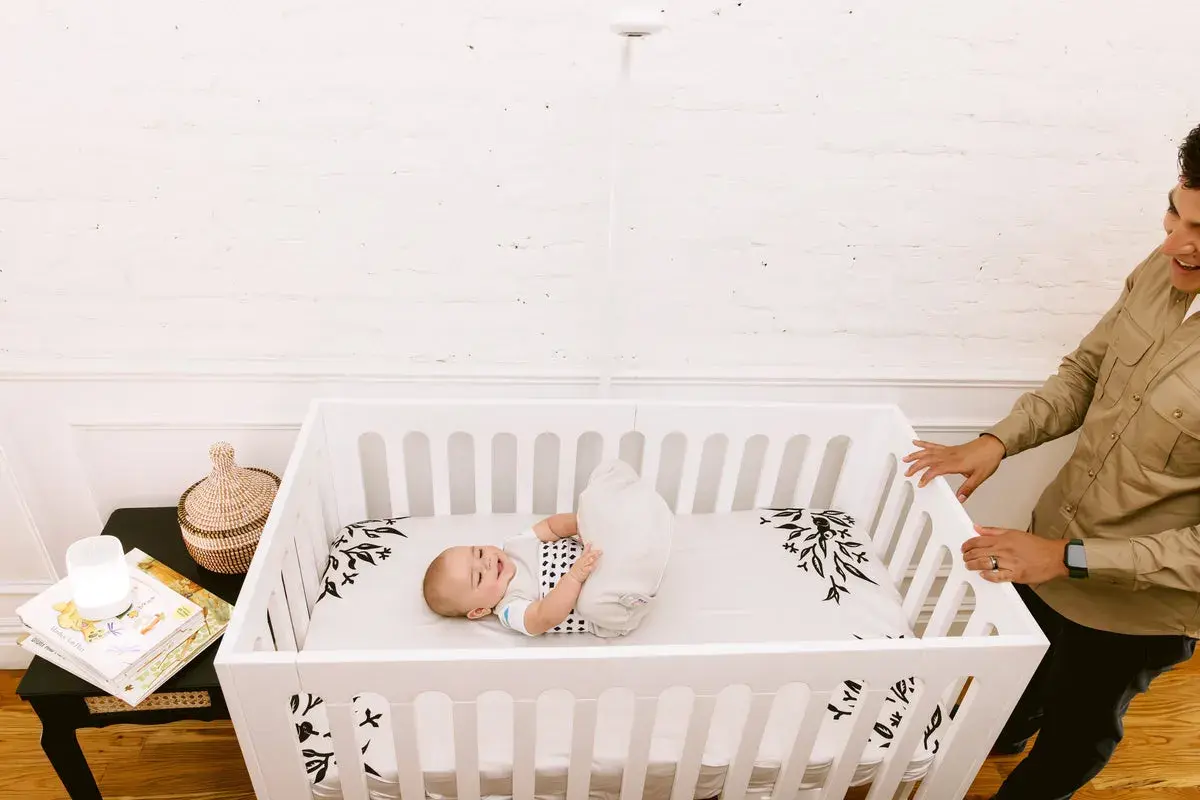
Setting up sleep space for twins is mostly a question of planning: how many safe sleep surfaces you need now, how much room you have, and whether you want furniture that still earns its keep after infancy. A baby crib twin query usually means one of two very different purchases, and mixing them up can lead to wasted money or the wrong nursery layout. In this article I break down the real options, the safety rules that matter in a US home, and the practical features worth paying for.
Key points that make the decision easier
- Twins need separate safe sleep spaces at the newborn stage, even if the nursery is small.
- A crib that converts to a twin bed is a long-term choice for one child, not a twin-specific solution.
- Safety comes first: firm mattress, tight fit, no loose hardware, and bare sleep space.
- Convertible hardware costs extra in many cases, so check the full price before you buy.
- Room-sharing is normal for the first months, but each baby still needs an individual sleep surface.
What people usually mean by a twin crib
The phrase gets used in two different ways, and that is where shoppers get tripped up. Sometimes they mean a sleep setup for twins, which in practice means two separate places to sleep. Other times they mean a crib that grows into a twin bed later on, which is really a long-term furniture choice for one child.
For newborn twins, think separate sleep spaces
When I plan a nursery for twins, I do not start with style or theme. I start with the fact that each baby needs an individual safe sleep surface. That can mean two full-size cribs, two mini cribs, or a crib plus another approved sleep space for the short term. What it should not mean is trying to make one standard crib do the work of two babies.
Read Also: Bassinet Alternatives: Choose the Safest Sleep Space for Baby
For one child, think future conversion
A crib that turns into a twin bed is a different category altogether. It is useful if you want furniture that lasts beyond the toddler years and you are willing to pay for the extra hardware and the room footprint that a twin bed will eventually need. That future value can be real, but it does nothing for the newborn twin stage. That distinction is important, because safety should shape the first purchase, and the next section is where the non-negotiables start.
The safety rules that should come first
When I narrow crib options, I treat safety as the filter before I look at finishes, storage, or brand names. The CPSC crib guidance is very specific: the mattress should fit tightly, slats should be close enough to prevent a baby from slipping through, and hardware should be complete, stable, and intact. In practical terms, that means a firm mattress, no gaps at the edges, and no decorative details that create snag or entrapment risks.
- Use a firm mattress that fits the crib snugly on all sides.
- Keep the sleep space bare with only a fitted sheet.
- Avoid loose bedding, pillows, bumpers, stuffed toys, and aftermarket padding.
- Check the hardware before every stage change or mattress-height adjustment.
- Make sure the crib is stable and has no missing or broken parts.
- For twins, place each baby separately in an approved sleep surface rather than trying to share one crib.
The other piece of guidance I keep in mind is the AAP recommendation to room-share, not bed-share, for at least the first six months. That is a practical point for twins too: keeping the babies in your room can make feeding and overnight checks easier, but it does not change the rule that each child needs a safe, separate surface. Once you have that baseline, it becomes much easier to compare actual crib setups without getting distracted by marketing language.
Which nursery setup fits twins best
There is no one perfect answer, but there are better and worse fits depending on room size, budget, and how long you want the furniture to last. I like to compare the options side by side, because the real tradeoff is usually space versus longevity.
| Setup | Best for | Typical US cost range | Main tradeoff |
|---|---|---|---|
| Two full-size cribs | Most families with enough floor space | $300-$1,000+ before mattresses | Takes the most room, but gives the cleanest long-term setup |
| Two mini cribs | Small nurseries or shared bedrooms | $200-$700 before mattresses | Saves space, but babies outgrow them sooner |
| Crib plus bassinet or approved temporary sleeper | Very small rooms or the first short stretch after birth | $150-$500 total depending on products | Useful early on, but it is not a full long-term twin solution |
| Convertible crib to twin bed | One child, long-term value, later bedroom transition | $250-$900+ plus kit and mattress | Smart for the future, but it does not replace a second crib for twins |
If the nursery is for twins, the honest answer is usually two sleep spaces first and furniture upgrades second. If the crib is for one child, a conversion path can be worth paying for. I would not let the twin-bed feature distract me from the newborn stage, because the baby phase is where the sleep setup either works quietly in the background or becomes annoying every night.
What to check before buying a convertible crib
Not every convertible crib is equal, and the differences matter more than the color or the influencer photos. I look at four things before I even think about price.
- Conversion parts - Find out whether the twin conversion kit is included or sold separately.
- Hardware quality - Good systems use manufacturer-specific parts and clearly labeled fasteners, not generic add-ons.
- Mattress compatibility - A standard full-size crib in the US is built around the standard interior footprint, so the mattress must match the product exactly and fit tightly.
- Long-term assembly - If the crib needs a lot of rework to become a bed, that cost shows up later in frustration, not just in dollars.
In real shopping terms, the hidden expense is often not the crib itself. It is the conversion kit, the twin mattress, and sometimes the extra guard rail or support slats that appear a year or two later. A crib advertised as “grows with baby” can still be a poor buy if the conversion path is vague or the manufacturer does not make the parts easy to source. I prefer products that make the future steps obvious on the box, not just in a long product page.
How to fit two sleep spaces into one room
When space is tight, layout matters almost as much as the furniture itself. I like to think in terms of movement: can you reach both babies easily, walk between the sleep spaces, and open drawers without blocking the room? That is the kind of detail that sounds small until it becomes your nightly routine.
- Keep cribs away from windows, cords, and shelves so nothing hangs over the sleep area.
- Leave enough clearance to pull out a drawer or move a chair without bumping the crib.
- Anchor tall furniture like dressers and bookcases.
- Use compact storage for diapers, sheets, and swaddles so the floor stays open.
- Choose a simple route from the door to each crib if you expect lots of overnight visits.

What the purchase still gives you after the baby stage
There is a real argument for buying furniture that does more than one job, but only if the long-term use is genuine. A crib that converts to a twin bed makes sense when you know you want a single piece to last through multiple stages and you are comfortable paying for the extra parts now or later. It also makes sense if the room you are furnishing will eventually become a child’s bedroom and you want to avoid buying a separate bed in a few years.
It makes less sense if you are trying to solve the twin-newborn problem on its own, because it does not reduce the need for another safe sleep space. It also makes less sense if your room is so small that a future twin bed would crowd everything else out. In those cases, I would rather spend on a simpler crib with a tight mattress fit and clean safety credentials than on a feature set that looks clever but does not help the nursery function right now.
The simplest rule I use is this: buy for the stage you are living in, not the stage you hope will arrive later. For twins, that means two safe sleep spots first. For a single child, it can mean choosing a crib that becomes a twin bed only if the conversion is clear, affordable, and truly useful in your space.
